Case Study
Designing an AgriSolar Monitoring System
Balancing energy production, land use, and crop protection through operational and environmental monitoring.
AgriPVEnvironmental MonitoringDashboard UXAutomation
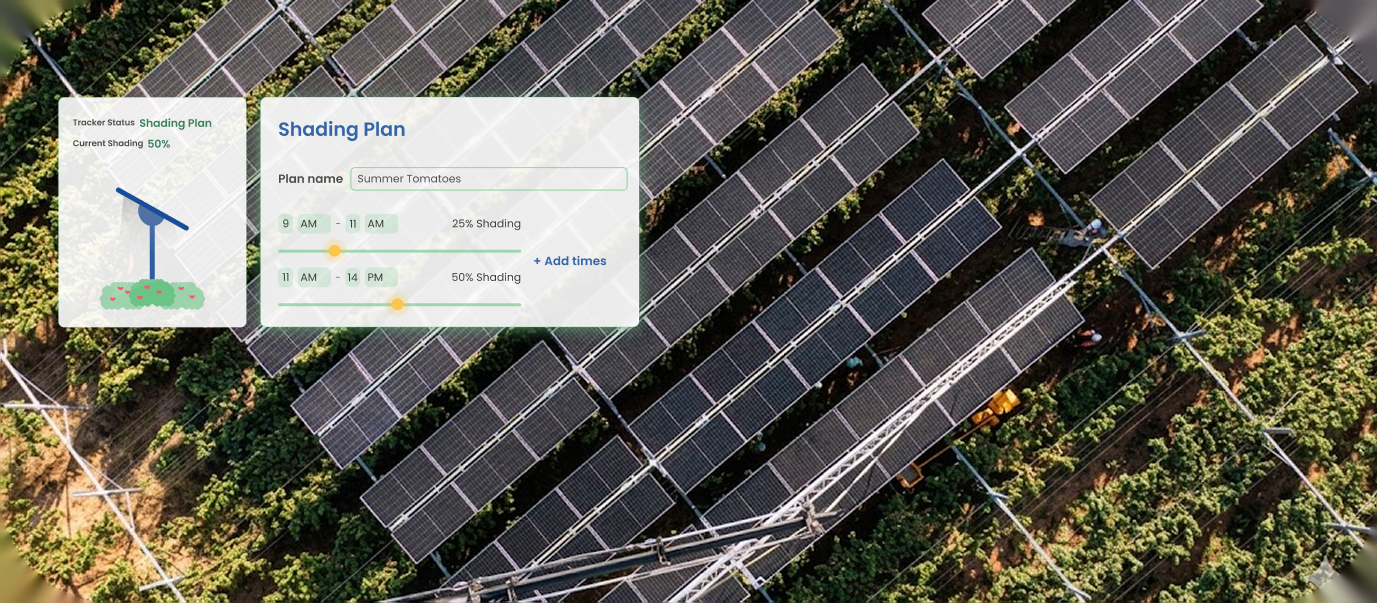
Balancing energy production, land use, and crop protection through operational and environmental monitoring.
AgriSolar systems introduce a unique operational challenge: solar infrastructure has to coexist with active farmland, blending energy generation with agricultural land use.
Managing panel behavior to protect crops from excess exposure.
Maintaining the environmental conditions crops need to thrive.
Led UX/UI strategy, product framing, and interaction design for a new AgriSolar operational category. Collaborated closely with engineering and cross-functional teams to align product logic with hardware constraints and real field conditions.
Transforming environmental complexity into operational awareness. Operations needed reliable visibility into a wide range of conditions, all while managing a complex, distributed field.
The challenge was designing a data-heavy environmental tool that could support real‑time behavior tracking and fast, confident decision-making.
The original concept focused mainly on scheduling shading and environmental data. Through rapid iteration, the platform evolved into a real‑time operational tool combining smart data visualization with environmental awareness, alerting, automation, and fast decision-making.
The strategy consolidated fragmented sensor data into a unified operational experience, converting environmental complexity directly into actionable guidance and system responses. By simplifying the information architecture, every field team member could access relevant insight quickly.
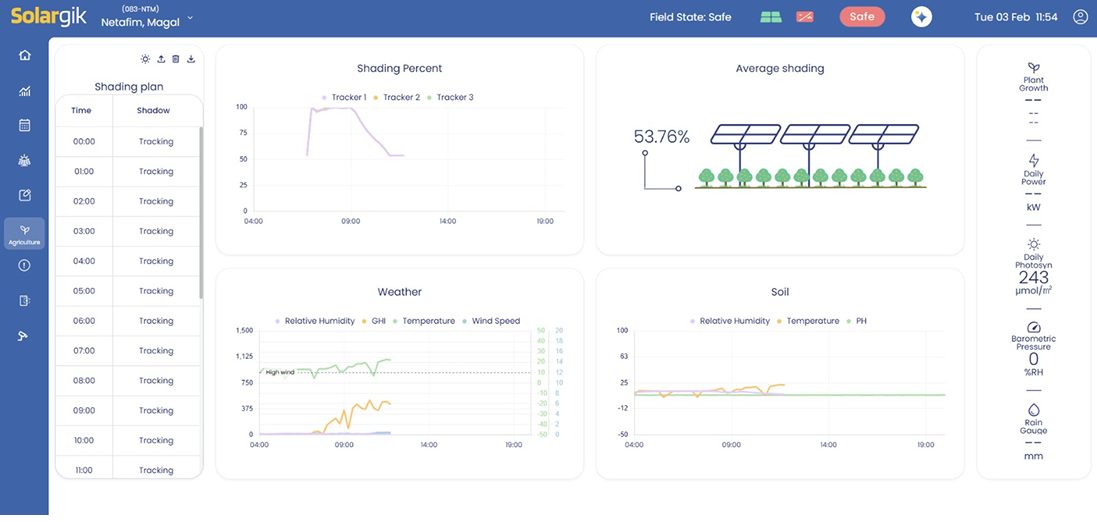
Legacy interface: fragmented data silos, inverted hierarchy, and low data-to-value ratio.
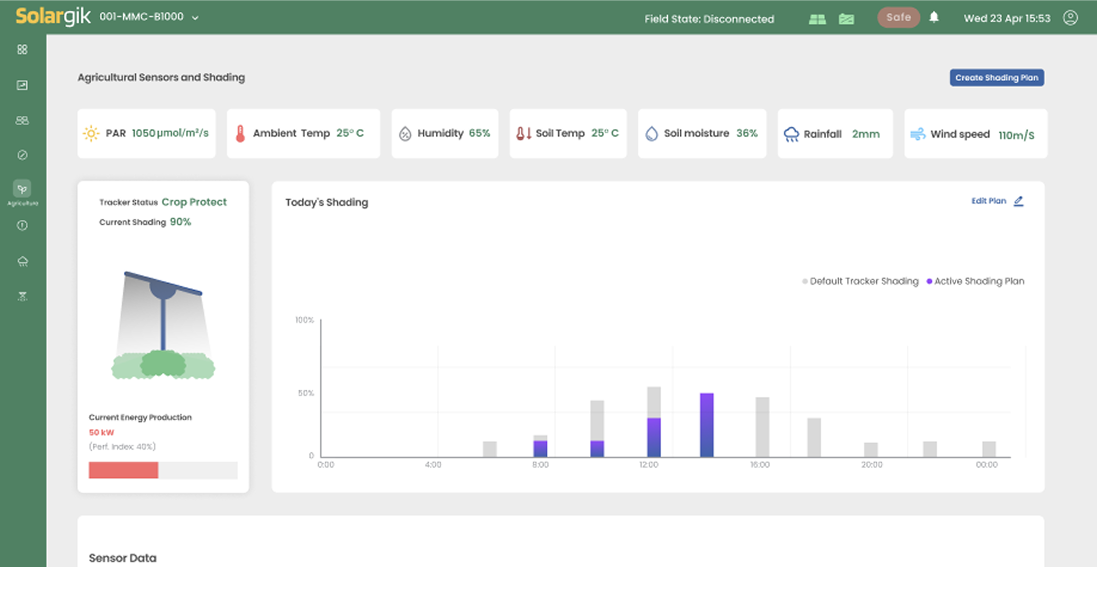
Redesign: unified spatial context, scannable sensor layers, and actionable controls.
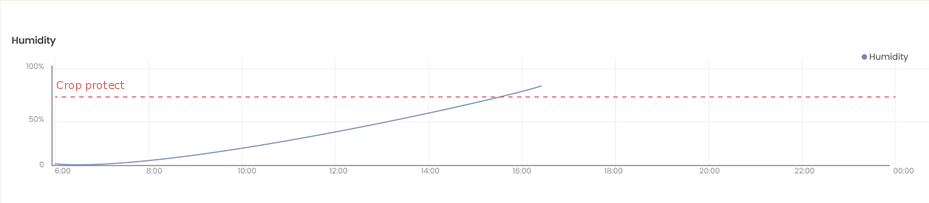
Inspired by existing Wind Safe mechanisms, the system introduced automated crop protection behavior triggered by dangerous environmental conditions.
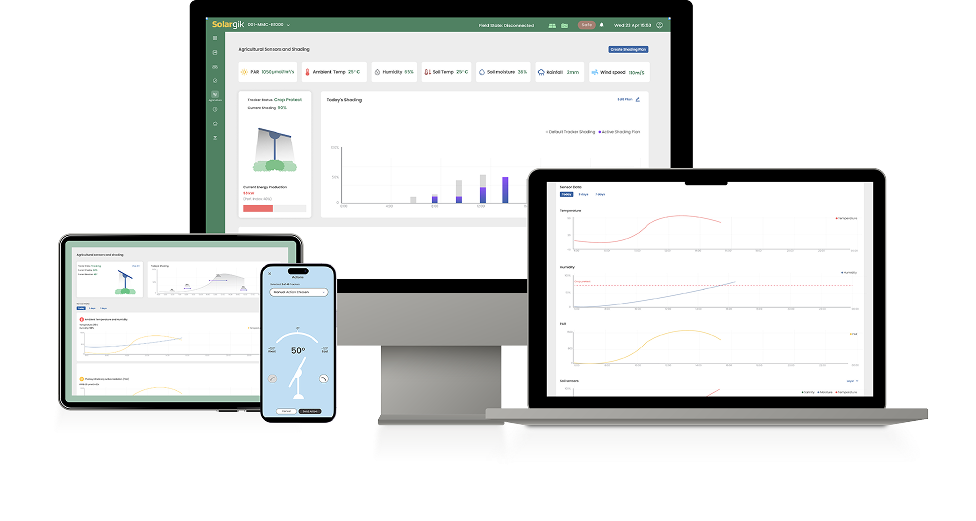
By combining real‑time environmental monitoring, shading visibility, and operational awareness into a unified workflow, the system directly supported the unique balance between energy optimization and crop protection.